- Dec 31, 2024
Learn About Arctic Animals with Sensory Snow Play 🏔️
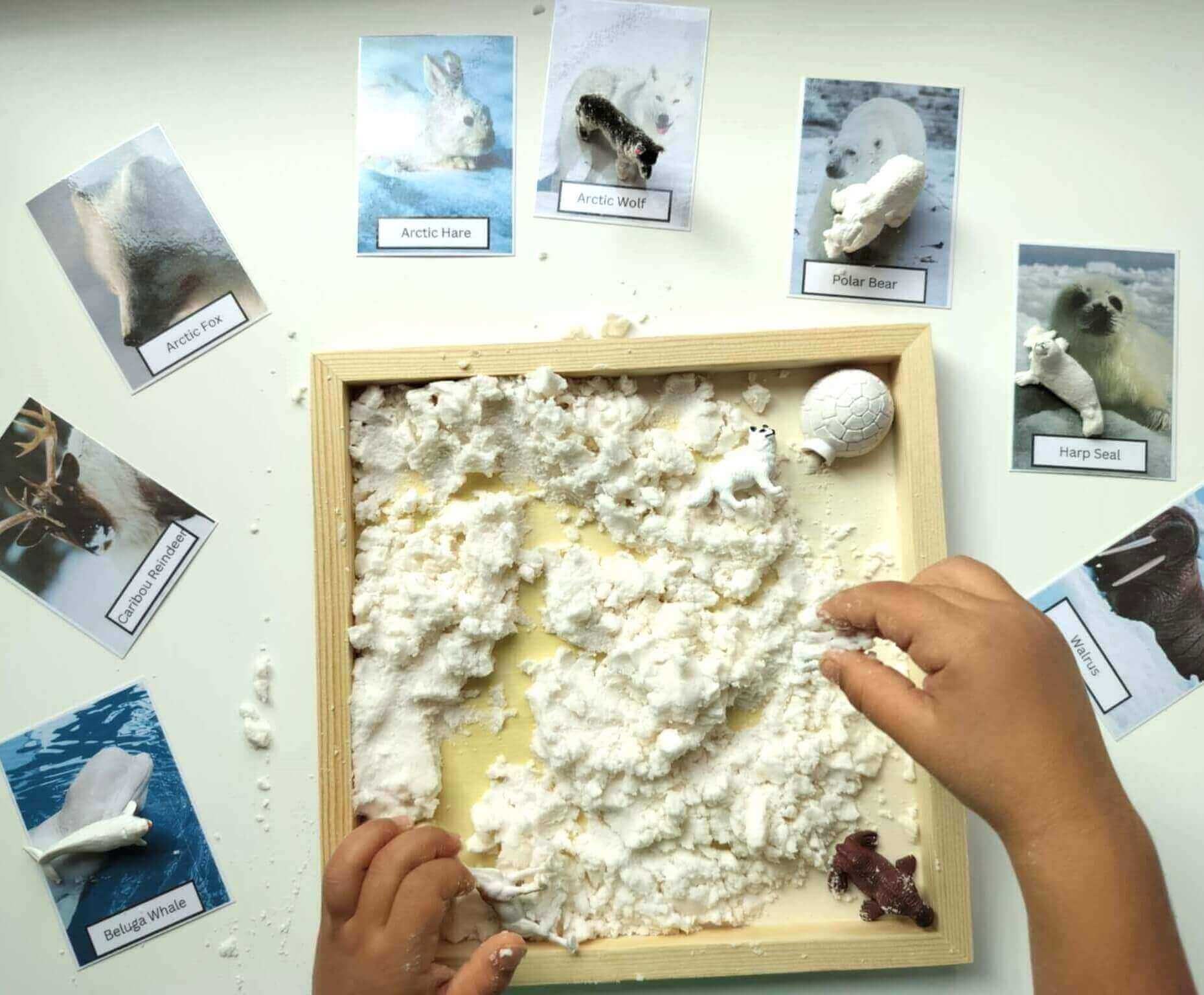
Explore the fascinating world of the Arctic with your little ones through a fun and engaging sensory play activity that promotes fine motor skills, hand-eye coordination, and vocabulary building! Designed for toddlers, preschoolers, and kindergartners, this activity uses easy-to-make “snow” and arctic animal figures to create a hands-on learning experience.
❄️ Sensory Snow Recipe
What You Will Need:
1 ½ cups bicarbonate soda (baking soda)
¼ cup hair conditioner
A tray
Instructions:
Mix the bicarbonate soda and hair conditioner in a large bowl until it forms a snow-like texture.
Transfer the “snow” to a tray and let the fun begin!
This cool (literally!) sensory base holds its shape, making it perfect for building mini snowmen or creating snow mounds for arctic animals. Its unique texture offers tactile stimulation, helping children develop motor skills and explore imaginative play. Plus, it stores well in a sealed container for repeat play.

📚 Setting the Scene
Before diving into the sensory play, I recommend starting with an educational video to introduce kids to the Arctic habitat and its unique animals. This video provides valuable context, sparking curiosity and offering a visual introduction to the Arctic's wonders, setting the stage for hands-on learning. While I typically limit screen time, this video provides valuable context and sparks curiosity: A Walk in the Arctic for Kids | Educational Video for Early Learners 🎥
Sensory Play in Action
Adding Arctic Animal Figures 🐾
Enhance the sensory snow activity by adding arctic animal figures. This creates opportunities for imaginative play and boosts vocabulary as kids identify and talk about each animal.
Here’s a fun twist: Challenge your kids to build a tiny snowman with button eyes and use the animals to “help” decorate it.
Alternatively, if you don’t have animal figurines, you can make the snow and let the kids explore the animals through the flashcards I created. This adds another layer of learning while sparking their imagination!
Linking the Activity to Learning
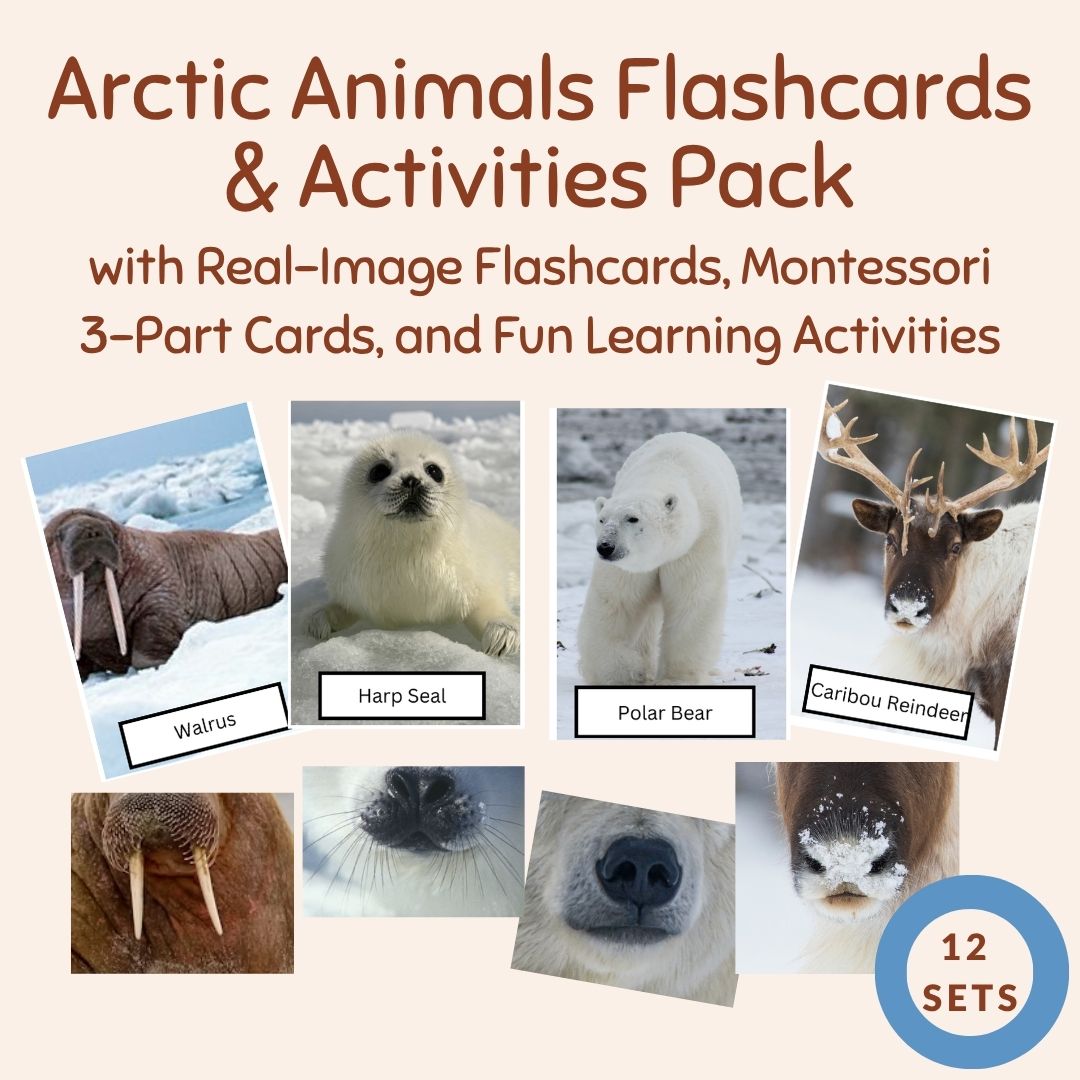
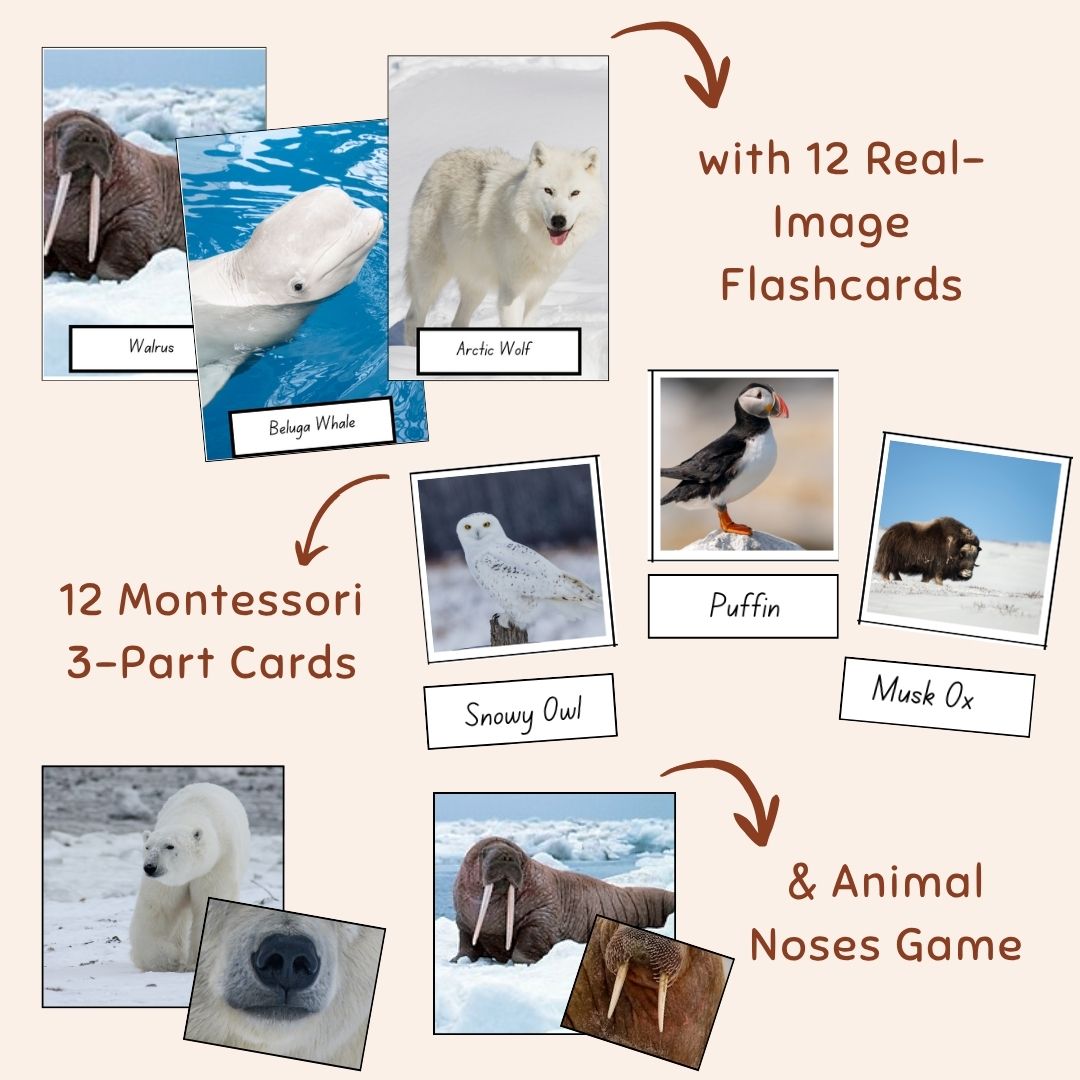
To deepen your child's understanding of Arctic animals, follow up the sensory play with the full Arctic Animals Flashcards & Activities Pack. It includes:
✨ 12 Real-Image Flashcards (Polar Bear, Arctic Fox, Arctic Hare, Musk Ox, Caribou/Reindeer, Walrus, Beluga Whale, Snowy Owl, Puffin, Lemming, Arctic Wolf, Harp Seal).
✨ 12 Montessori 3-Part Cards – animal photo, name, and word label separated for matching & reading practice.
✨Animal Noses Game – a fun matching activity kids love!
✨ Arctic Background Scenes – including one with animals already placed for easy setup.
✨ BONUS: Arctic Animal Color & Trace Book– coloring pages with traceable names for fine motor and handwriting skills.
What Kids Will Learn 🌍
1. What Lives in the Arctic Habitat?
Talk to your kids about the unique animals found in the Arctic, such as:
Polar Bear
Arctic Hare
Arctic Fox
Baluga Whale
Harp Seal
Arctic wolf
Walrus
Caribou Reindeer
2. Camouflage in the Arctic
Explain how many Arctic animals have white fur to blend into their snowy surroundings. This is a great opportunity to introduce the concept of camouflage.
3. How Animals Stay Warm
Discuss how Arctic animals stay warm in freezing conditions. Key points include:
Thick fur or feathers
A layer of fat called blubber
Encourage kids to think of ways they stay warm in winter and compare them to the animals' adaptations.
Arctic Facts to Share
Help your kids build a deeper understanding of the Arctic with these fun facts, tying them into the sensory play for a richer educational experience.
Characteristics of Arctic Animals
Thick fur or feathers protect them from the cold.
Blubber helps keep them warm in icy waters.
White fur provides camouflage against the snow.
The Arctic Food Chain
Explain how phytoplankton are the base of the Arctic food chain, supporting everything from zooplankton to polar bears.
Climate and Conservation
-
Highlight the challenges Arctic animals face due to climate change.
Polar bears lose hunting grounds as ice melts.
Walruses struggle to find stable ice platforms.
Simple acts like reducing recycling can make a big difference.
Arctic Animal Inspired Books 📚
Make the activity even more engaging by reading arctic animal-inspired books while playing. Books help fuel imagination and encourage kids to role-play what they see in the stories. Some book suggestions include:
Over in the Arctic: Where the Cold Winds Blow by Marianne Berkes
The Mitten by Jan Brett
Polar Bear, Polar Bear, What Do You Hear? by Bill Martin Jr. and Eric Carle
❄️ Wrapping Up the Arctic Adventure
After playing with sensory snow and learning through flashcards, end this Arctic-themed day with some creative coloring. Let your kids pick their favorite Arctic animal to color and trace its name. This hands-on approach reinforces what they’ve learned and keeps the Arctic adventure alive.
Join our email list for more free fun
Sign up to receive free printable games, activities, easy to follow craft tutorials, and more right to your inbox.
🌟 Stay updated and connected! 🌟
Click here to follow our blog for more exciting free coloring pages, kids' activities, and play ideas. 🎨 We can't wait to see what your little creators come up with! 💕 Don’t forget to share pictures and leave a comment. 💬 Have a playful and joyful time filled with creativity and fun!